Vera · IP valuation, coming soon
AI drafts. The evaluator decides. Everything traces back to the evidence.
A platform for valuing patents, brands, software and know-how — where the client is led through intake by an assistant, the case assembles itself as they talk, and a human evaluator keeps every decision. The report at the end is one that survives an audit.
One email when we open. Nothing else.
What it is
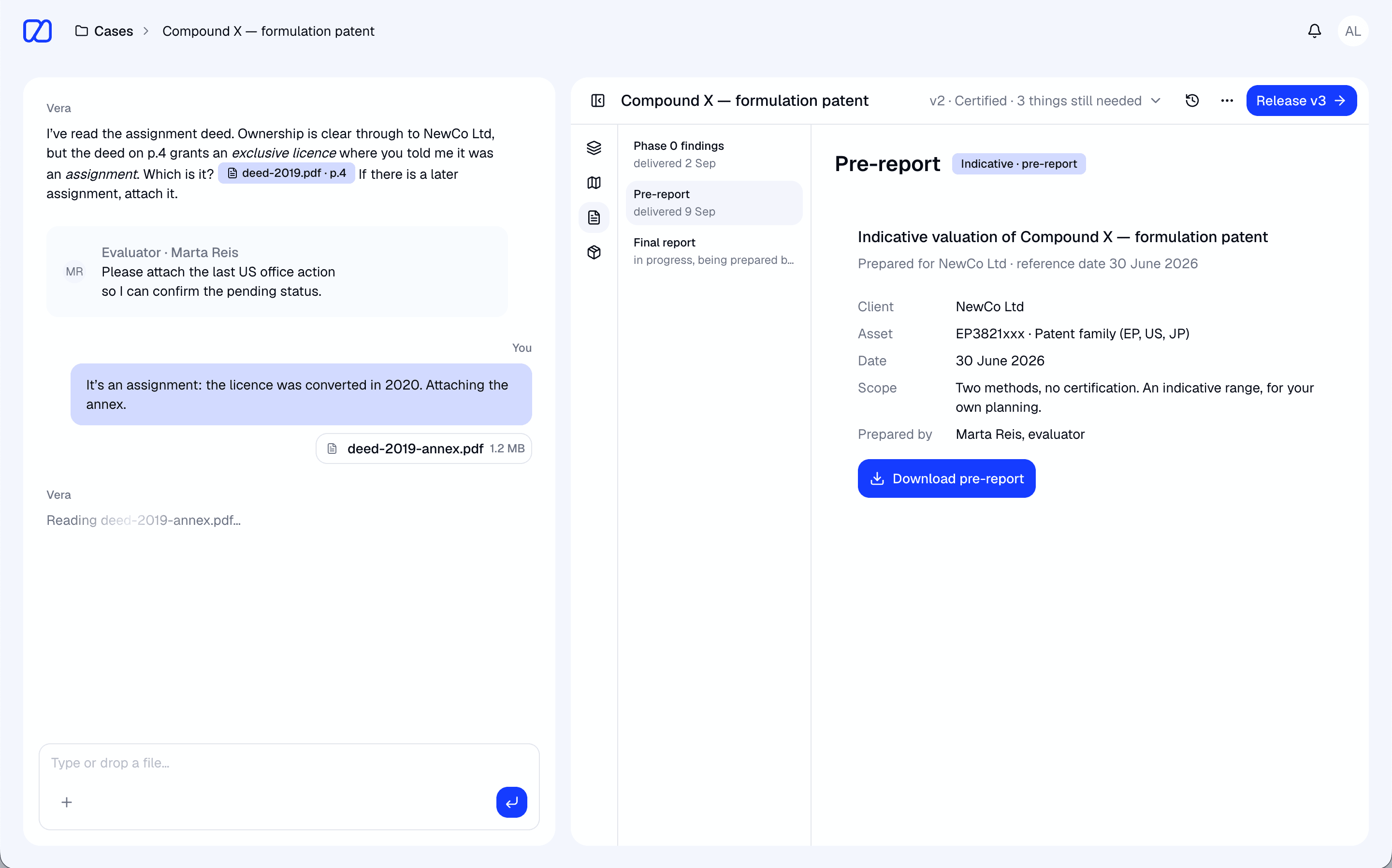
Not a form. Not a chatbot. A workspace where the case builds itself.
Valuing an IP asset today runs on video calls, hand-prepared reports and email. Vera keeps what makes that work trustworthy — an expert asking the right questions, a human making the call — and gives it a structure.
How it works
Four stages. Four letters.
A case moves through valuation, evidence, review and attestation — and at no point does the AI decide anything. It drafts, it flags, it suggests. The evaluator accepts, changes or rejects, and the record shows which was which.
Valuation
The client builds the dossier with the assistant: what the asset is, who owns it, why it is being valued and for which date. Releasing a version is the moment it becomes the evaluator's.
Evidence
Documents, contracts, revenue history and benchmarks attach to the branch they support. Nothing enters a calculation without a source, and the evaluator's clarification requests appear as open nodes in the same workspace.
Review
The evaluator reads the AI's pre-report and method suggestions, chooses and weights the methods, writes the rationale, and validates. Their decisions are visibly distinct from the suggestions they were made against.
Attestation
A revocable link takes the finished report to the certifying body, which questions the evaluator and uploads its certification. The client sees the report only once both the evaluator and the administrator have released it.
In the product
Two of those stages, on screen.
Prototype screens, from the case the demo runs on. What they show is the part that is hardest to say in words.
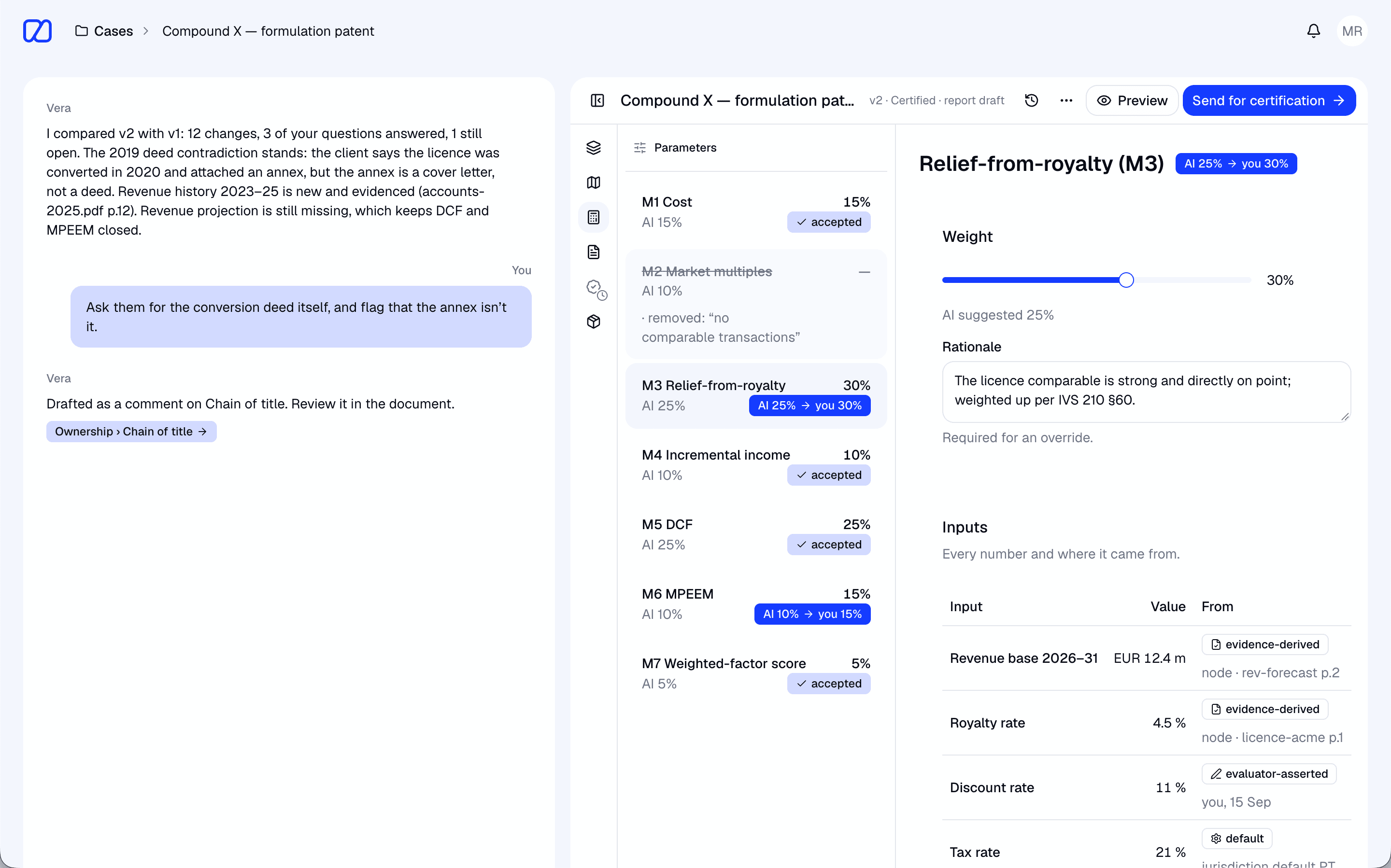
The evaluator decides, and the record shows it.
Every method carries two figures: what the AI suggested, and what the evaluator set.
An override needs a rationale before it stands — "weighted up per IVS 210 §60" — and a method the evaluator removes keeps the reason it was removed. Every input below the weights says where it came from: evidence-derived with the page, evaluator-asserted with the date, or a jurisdiction default. Nothing in the valuation is a number without a source.
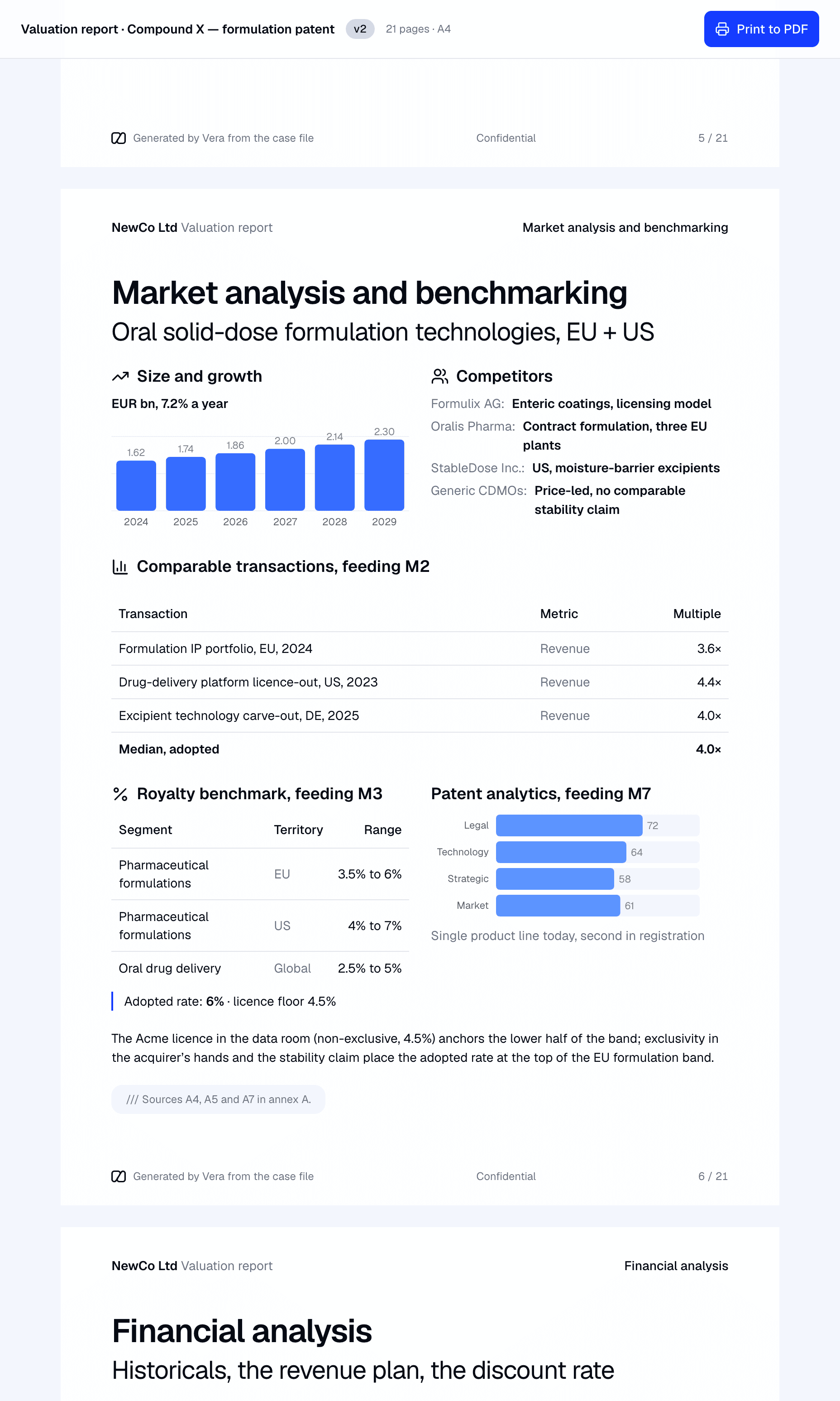
The report is generated from the case file.
Not transcribed from it. The same figures the evaluator validated, laid out for a reader.
Market size and growth, comparable transactions feeding the market multiple, the royalty band and the adopted rate, the patent-analytics scores behind the technology factor — each table footed with the annex it came from. A change in the case is a change in the report, and a reviewer can walk any number back to the page it was taken from.
Who it's for
The people a valuation has.
Built with an IP valuation expert as its first customer, for the three sides of every case.
FAQ
The questions you were about to ask
Answered plainly. If yours isn't here, write to us — the address is in the footer.
Be there when Vera opens.
One email, when the intake workspace is ready for real cases. No newsletter, no drip, no second message you didn't ask for.