Vera · IP valuation platform, launching soon
IP valuation you can defend.
Vera values patents, brands, software, and know-how. An assistant collects the case from your client, a human evaluator chooses the methods and signs the report, and every number in the report links back to the document it came from.
We'll send you one email when Vera launches. We won't send anything else.
Who it's for
Built with a practising IP evaluator as the first customer, for the three sides of every valuation.
How it works
From intake to certification in four steps.
The AI drafts, flags gaps, and suggests methods. The evaluator accepts, changes, or rejects each suggestion, and the report records which was which.
Collect the case
Your client answers the assistant in plain language and uploads documents. The assistant asks for what the applicable methods need, explains why it needs it, and builds the case file as they go. Releasing a version hands it to the evaluator.
Attach the evidence
Contracts, revenue history, and benchmarks attach to the part of the case they support. Nothing enters a calculation without a source, and the evaluator's questions go back to the client inside the same case.
Review and decide
The evaluator reads the AI's pre-report, chooses and weights the methods, writes the rationale, and validates the valuation. Each decision is stored next to the suggestion it replaced.
Certify and release
A revocable link takes the report to the certifying auditor, who questions the evaluator inside the case and uploads the certification. The client receives the report once the evaluator and the administrator have both released it.
In the product
The evaluator's decisions and the generated report.
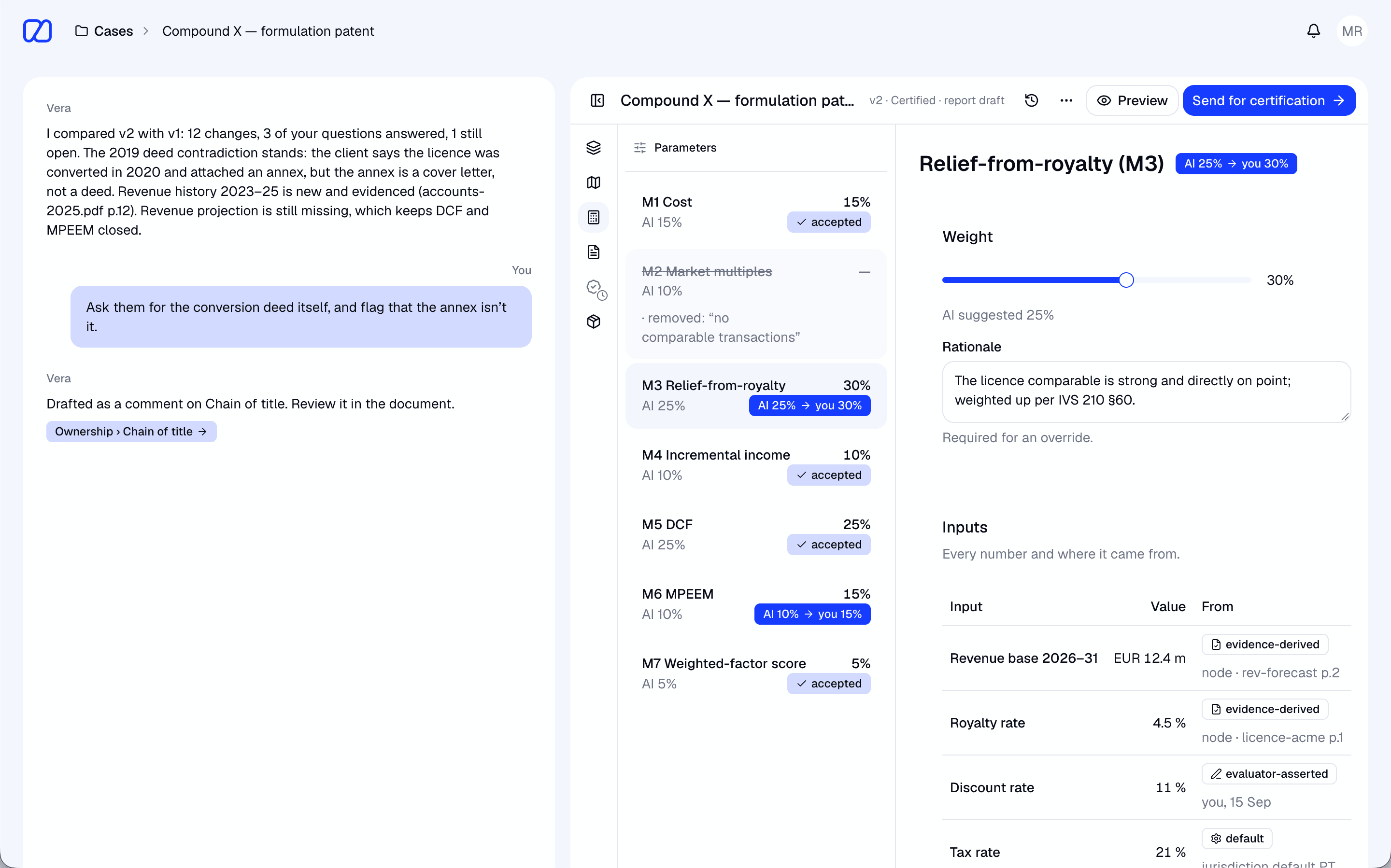
Two screens from the prototype, taken from the case the demo runs on.
Every weight shows the AI's suggestion and the evaluator's decision.
An override needs a written rationale, and a removed method keeps the reason it was removed.
Below the weights, every input names its source: the document and page it was taken from, the evaluator who set it and the date, or the jurisdiction default it fell back to. The valuation contains no number without a source.
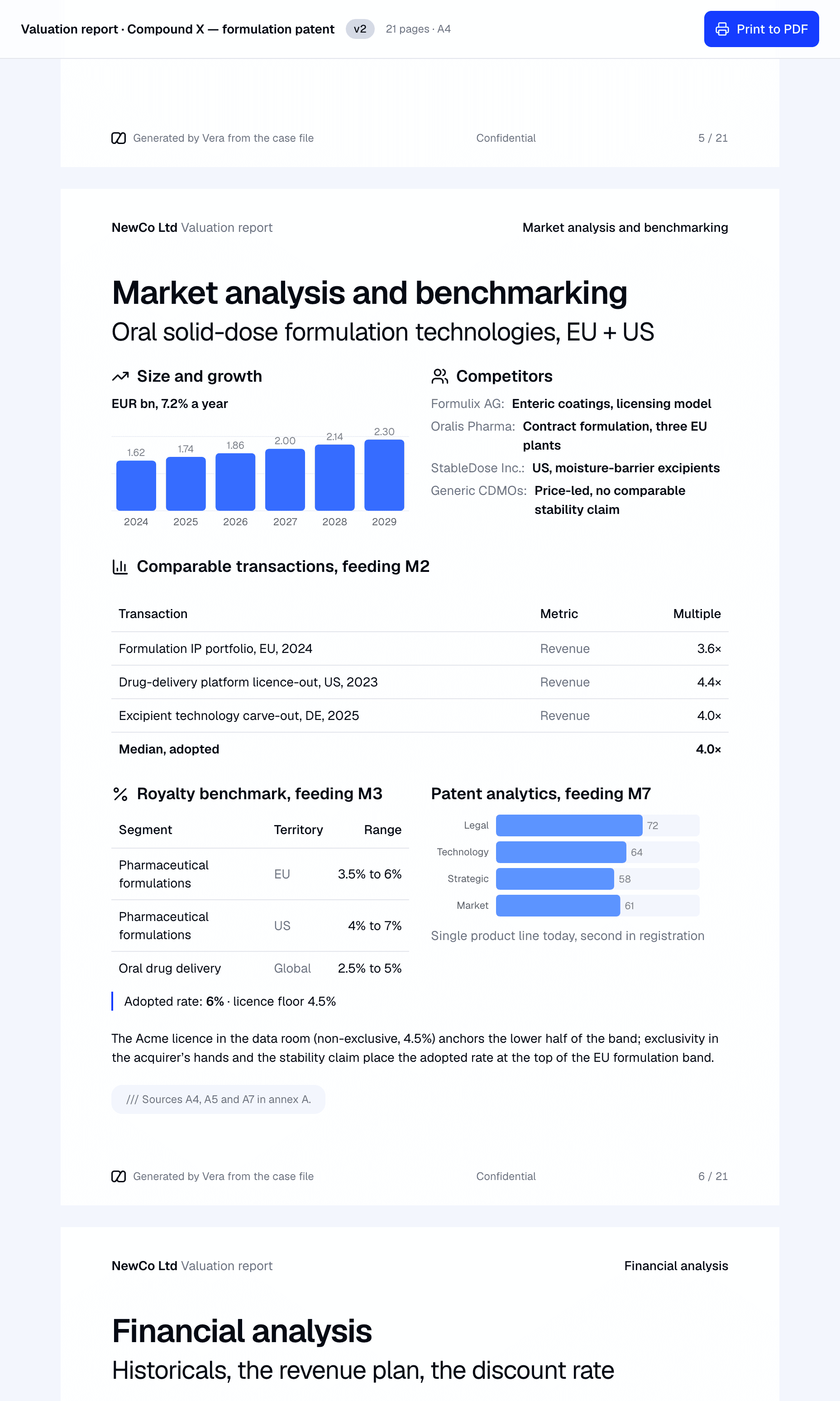
The report is generated from the case file.
The figures the evaluator validated, laid out for the reader.
Market size and growth, the comparable transactions behind the market multiple, the royalty range and the adopted rate, and the patent analytics behind the technology factor, each table with its annex reference. A change in the case changes the report, and a reviewer can trace any number to the page it came from.
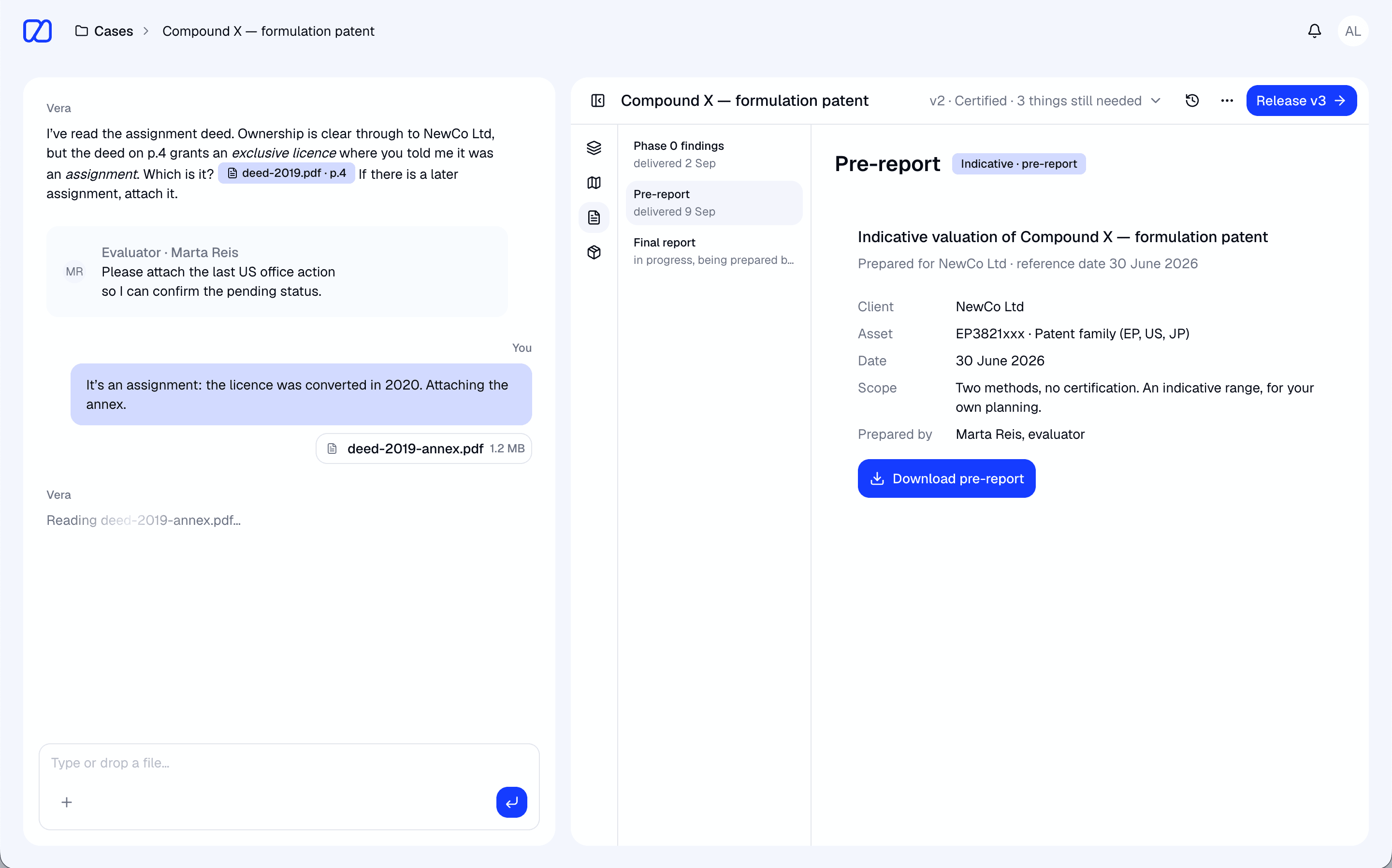
The workspace
The case builds itself while the client talks.
Today an IP valuation runs on video calls, hand-prepared reports, and email threads. Vera keeps the expert conversation and gives it a structure that a calculation can use.
FAQ
If your question isn't here, write to us. The address is in the footer.
Get an email when Vera launches.
We'll send you one email when the intake workspace is ready for real cases. We won't send anything else.